ila colombo
§ research / four layers

Seeing →Judging →Encoding →Becoming

No two people see the same thing in the same way. My work begins in that difference: in how perception becomes judgement, how judgement might be recorded, and what remains human once it is.

01seeing / cognition

eye(you) ≠ eye(me)

Looking is never neutral. Before any decision is made, attention has already chosen what to rest on and what to pass over. Two people in front of the same image do not see the same image, and the difference is close to a signature. Perception, in this sense, is already a form of authorship.

youme
fig. 1 / one frame, two readings
02judging / philosophy

taste = ∫ practice dt

Taste is not a gift. It is judgement, and judgement is trained much as an athlete's body is: through repetition, comparison, correction and honest failure. Competitive sport taught me this long before design did.

Technology democratises the tool, never the eye. As tools become universally available, the value of the eye increases rather than diminishes.

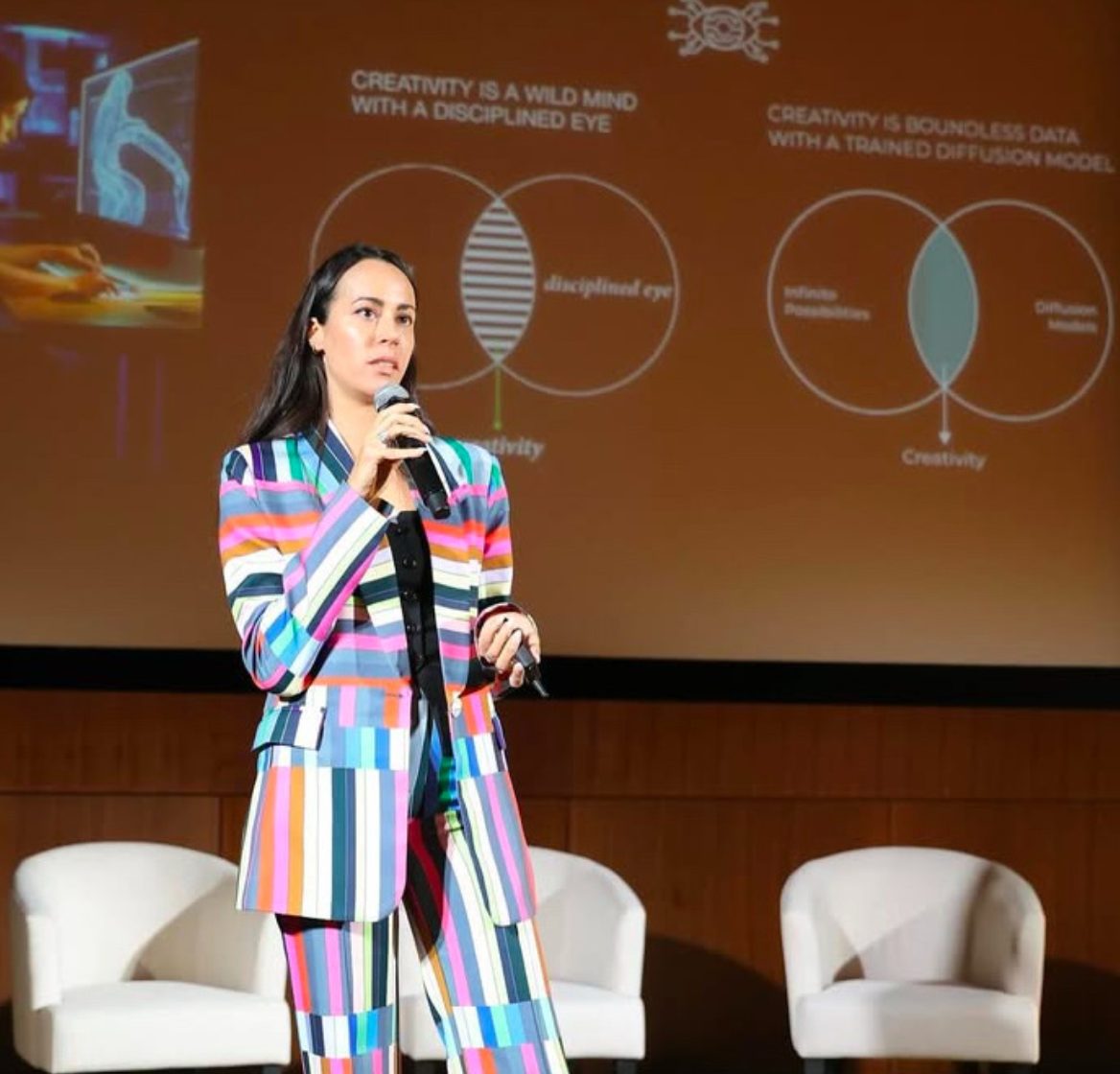
Ila on stage at FutureTech Con 2024 in a striped suit, in front of a slide with two Venn diagrams about creativity.
creativity = wild mind ∩ disciplined eye my slide, FutureTech Con 2024 / AI and Technology for Culture / Etihad Museum, Dubai
03encoding / theory

record(eye) ≠ eye

A way of seeing can be recorded, but only in part. Any record is a translation: it keeps certain choices and loses the hesitation, the context and the body that made them. It can inform a machine. It never becomes the eye itself.

The ethical question lies in that gap. If a system learns from an individual's judgement, what it learns should remain theirs. It is also the question on which DREAMVISION AI, the company I co-founded, is built.

eq. (5) / Δ effort: making → judging

Displacement offers a precise analogy: a body entering water does not remove volume, it displaces it. Artificial intelligence does the same to creative effort, moving it from execution to evaluation. I describe this as the volume displacement of effort.

eye decisions recordowner = the person it came from eye
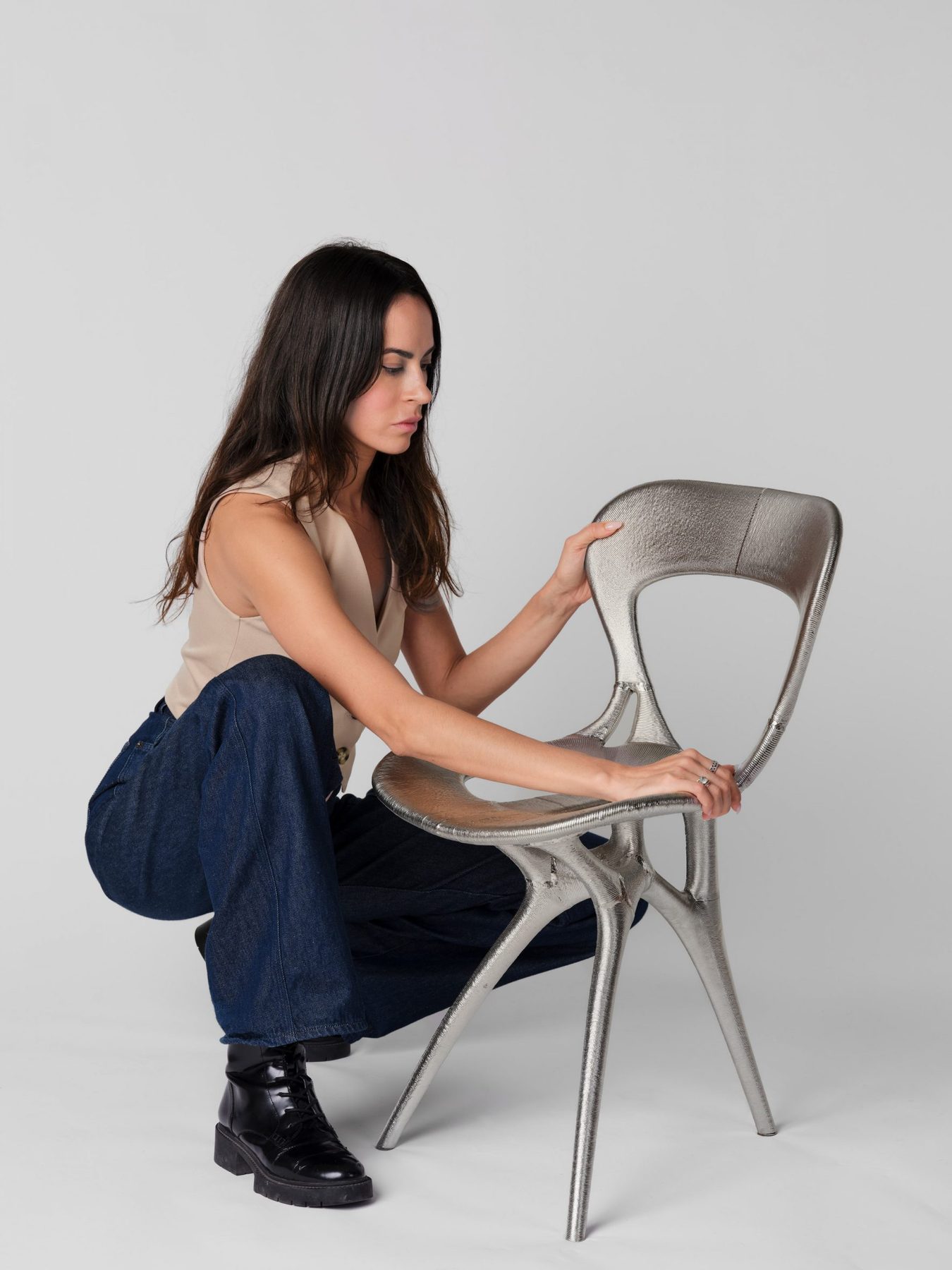
Ila crouching beside a metal 3D-printed chair with branching legs.
Seed 6143, with Ross Lovegrove and Google DeepMind / photo: Martina Ferrera
case / seed 6143

On Seed 6143, Ross Lovegrove Studio's collaboration with Google DeepMind, developed while I was creative director, the decisive problem was language. I built a vocabulary in advance, scored each term against what the model returned and regrouped the terms into phrases in real time. The chair emerged from that inquiry and its constraints, not from the model alone.

04becoming / the future

what remains human

The future of human creativity is less a technical question than a cultural one: which capacities we choose to keep exercising with our own eyes and hands, and what is lost when we stop.

It is the subject of a book in progress, due in autumn 2027, developed in the essays of Upside Up.

book / in progress autumn 2027 read Upside Up ↗
§ field

Meta-Cognition

monitoring ↑ / control ↓

Metacognition, cognition about cognition, names the capacity to monitor and regulate one's own thinking. Long treated as a component of learning, it becomes, in creative work alongside artificial intelligence, the central professional skill.

(i) From execution to evaluation

When generative systems assume much of the making, effort is not removed but displaced towards judgement: the volume displacement of effort set out above.

(ii) Judgement made legible

Metacognition is the means by which tacit decisions become visible. What becomes visible can be taught, examined and, in part, encoded.

(iii) Hybrid professions

Between making and judging, new roles are forming across architecture and design. Most remain unnamed; education will need to anticipate them before industry defines them.

§ speaking

Speaking

I give keynotes, lectures and panels on perception, judgement and the future of human creativity alongside artificial intelligence.

ila.colombo@deond.com
SXSW / Art Dubai / Dubai Future Forum / Museum of the Future past talks →